
Building a successful business takes more than offering good products or services. Customers need to understand what your company stands for, why it is different, and how it can meet their needs. A clear brand strategy gives a business direction for communicating its value consistently.
For startups and small and medium-sized enterprises (SMEs), this is particularly important. They often compete with established companies while working with limited budgets. A focused approach helps them build recognition, earn trust, and make better marketing decisions.
This guide explains the key elements of branding and how smaller businesses can create a practical plan for long-term growth.
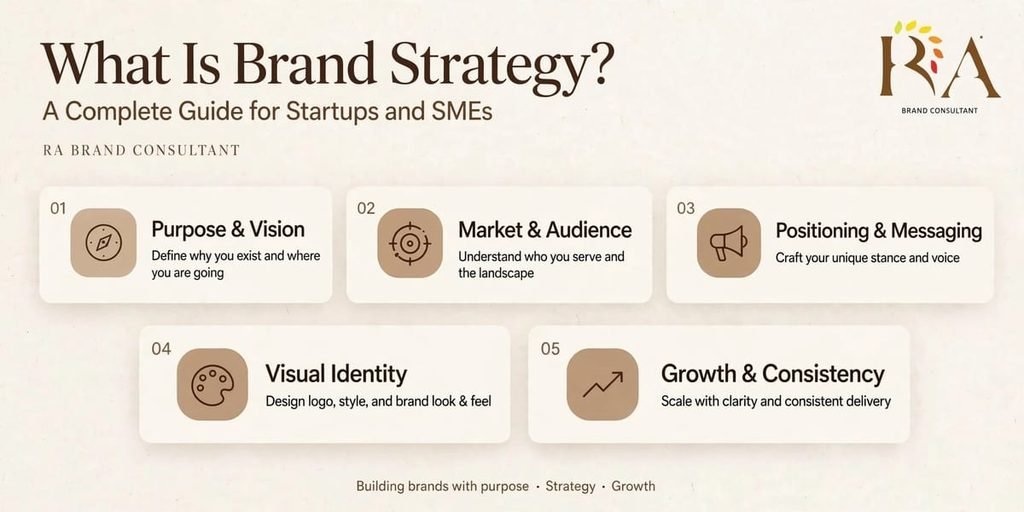
What Is Brand Strategy?
Brand strategy is a long-term plan that defines how a business wants to be recognized by its target audience. It connects the company’s purpose, values, customers, market position, personality, and messaging.
It should answer five important questions:
- Who are your ideal customers?
- What problem does your business solve?
- What makes your offering different?
- What should customers remember about your company?
- How will you communicate your value consistently?
For example, a skincare startup cannot rely on attractive packaging alone. It must understand its customers, explain what makes its products relevant, and communicate those benefits across its website, packaging, and marketing channels.
Why Do Startups and SMEs Need a Clear Brand Direction?
Smaller businesses may not have the advertising budgets or market reach of larger competitors. They can still compete through relevance, specialization, customer service, and clear communication.
A defined brand strategy helps businesses:
1. Build Brand Recognition
Consistent colors, design, language, and messaging make it easier for customers to identify a business across different platforms.
2. Communicate a Difference
Competitor research helps a company explain why its product or service is worth considering. The difference should matter to customers rather than simply being a claim that the business is better.
3. Make Marketing More Consistent
When teams share the same audience priorities and message, websites, social media posts, advertisements, and sales materials are less likely to contradict one another.
4. Support Business Decisions
Clear brand principles can guide decisions about products, partnerships, customer experience, and expansion. They provide a consistent reference point as the company grows.
Key Elements of an Effective Brand Strategy
A useful plan connects several elements instead of treating design, marketing, and communication as separate activities.
1. Purpose, Vision, and Values
Purpose explains why the business exists and the value it aims to provide. Vision describes what it wants to achieve, while values guide how it operates.
These statements should reflect actual business behavior. Words such as quality and innovation have little meaning unless the company can demonstrate them through its products and services.
2. Target Audience
Identify the people most likely to need and buy your product or service. Consider their needs, challenges, buying habits, and decision-making factors.
Avoid defining your audience too broadly. Everyone is rarely a useful target market. Customer interviews, sales feedback, and website analytics can help validate your assumptions.
3. Brand Positioning
Brand positioning describes the place a business wants to occupy in the minds of target customers compared with its competitors.
Study competing businesses, identify market gaps, and decide which strengths matter most to customers. Your message should be specific and credible. Avoid claiming to be the cheapest, fastest, and most premium option simultaneously unless you can support those claims.
4. Customer Experience
Every interaction shapes how people perceive a company. The website, enquiry process, product quality, delivery, and customer support should match the expectations created by marketing.
What Do Brand Strategy Services Include?
Professional brand strategy services help businesses research their market, clarify their positioning, and turn decisions into practical brand assets.
Depending on the business requirements, an agency may provide:
- Brand Research: Reviewing customers, competitors, industry trends, and market opportunities.
- Positioning and Messaging: Defining the value proposition, differentiators, and communication priorities.
- Identity Development: Creating visual and verbal elements that represent the business.
- Brand Guidelines: Documenting how the identity should be used across different channels.
- Marketing Alignment: Connecting brand communication with content, websites, SEO, social media, and advertising campaigns.
Not every business needs every service immediately. A startup may first need audience research and positioning, while an established SME may need to update an inconsistent identity before investing in additional promotion.
How to Build a Practical Brand Roadmap
A brand roadmap turns business decisions into an organized plan. It identifies what needs to be done, who is responsible, and how progress will be reviewed.
Step 1: Audit Your Current Brand Presence
Review your website, social media profiles, sales materials, customer feedback, and visual identity. Identify what is consistent, what is unclear, and where improvements are required.
Step 2: Research Customers and Competitors
Understand customer expectations and examine competitor offerings. Look for unmet needs or areas where your business has a genuine advantage.
Step 3: Set Priorities and Positioning
Choose your target audience, the value you want to communicate, and the evidence that supports your claims. Record these decisions so your team follows the same direction.
Step 4: Develop Your Identity System
Create or refine your logo, design elements, tone of voice, key messages, and brand guidelines. Ensure that the identity works across digital and offline platforms.
Step 5: Plan Implementation and Measurement
Select the marketing channels that matter most to your audience. Assign responsibilities, timelines, budgets, and deliverables.
Track relevant indicators such as website visits, qualified enquiries, conversion rates, customer feedback, and repeat business. Review the results regularly and make improvements when necessary.
Common Branding Mistakes Startups and SMEs Should Avoid
Some businesses treat branding as a one-time logo project. Others copy competitors, make unsupported claims, or frequently change their messaging.
These mistakes can confuse customers and waste marketing resources.
To avoid them:
- Understand your audience before making design decisions.
- Focus on genuine business strengths instead of copying competitors.
- Maintain consistent communication across platforms.
- Ensure your products and services match your brand promises.
- Measure meaningful business outcomes rather than focusing only on social media likes.
How an RA BRAND CONSULTANT Can Support Your Business
RA BRAND CONSULTANT offers branding and digital marketing services for businesses seeking a consistent market presence.
Depending on a company’s requirements, its services include brand management, identity development, website development, SEO, social media marketing, content creation, and performance marketing.
For startups, the work may begin with clarifying the target audience, value proposition, and visual identity. For established SMEs, priorities may include improving brand communication, aligning digital channels, or reviewing their market positioning.
The right approach should reflect the company’s goals, resources, and current challenges rather than purchasing every available service.
Businesses can explore RA BRAND CONSULTANT’s services and discuss which branding and marketing activities are relevant to their next stage of growth.
Conclusion
Building a recognizable business requires clear decisions and consistent communication, not just attractive design. Startups and SMEs should understand their customers, identify what makes their business relevant, and communicate that value across important customer touchpoints.
A practical roadmap makes the process manageable by setting priorities, responsibilities, and measurable objectives. Reviewing and improving the approach as the business grows can help maintain a consistent market presence.
Frequently Asked Questions (FAQs)
1. What is brand strategy in simple terms?
It is a long-term plan that defines how a business wants customers to recognize, understand, and distinguish it from competitors.
2. Why do startups need a brand strategy?
It helps new businesses identify their audience, communicate their value, establish an identity, and maintain consistent marketing from the beginning.
3. What are the main brand strategy services?
They commonly include market research, positioning, messaging, identity development, brand guidelines, and marketing alignment.
4. What is a brand roadmap?
It is a structured plan outlining branding priorities, activities, responsibilities, timelines, and performance measurements.
5. How is brand positioning different from brand identity?
Positioning defines the place a business wants to occupy in customers’ minds compared with competitors. Identity includes the visual and verbal elements used to represent the business.
6. How long does it take to develop a brand plan?
The timeline depends on research requirements, approvals, and project complexity. A focused project may take a few weeks, while a broader branding project can take longer.