
By RA BRAND CONSULTANT | Insights drawn from hands-on experience in property and developer brand strategy
Buying a home or investing in property is one of the biggest financial decisions most people ever make. Before anyone visits a site or signs a booking form, they ask a simple question: can I trust this company? That is why real estate branding has moved from a “nice to have” to the foundation of every successful developer, broker, and property consultancy. In this guide, RA BRAND CONSULTANT explains how strategic real estate branding builds credibility, shortens the buyer journey, and creates long-term business value.
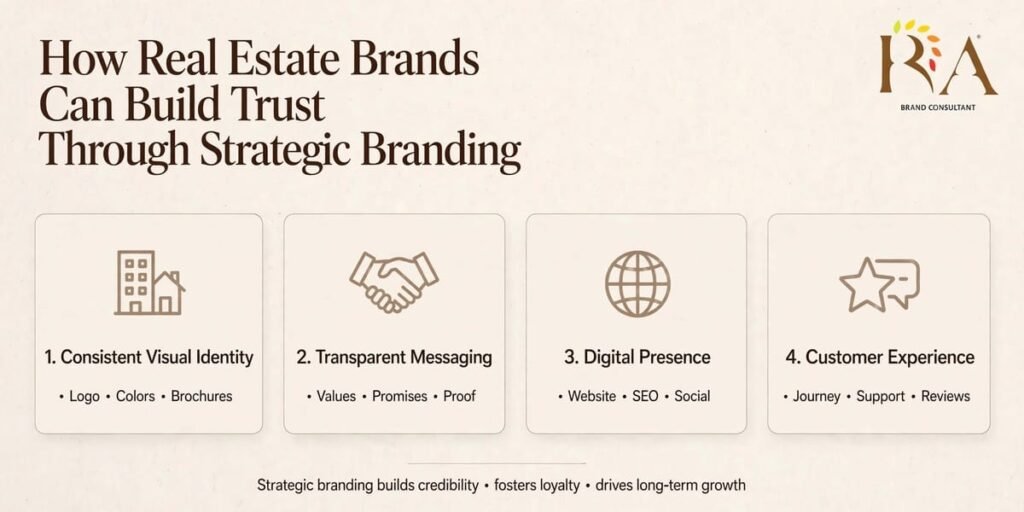
Why Trust Matters in Real Estate Branding
Property is a high-value, long-term purchase. Buyers worry about delayed possession, hidden charges, unclear titles, and poor construction quality. A brand that answers these worries before they are voiced wins attention and loyalty. Strong real estate branding gives prospects visible proof of reliability: a clear promise, a consistent look, and a track record they can verify.
The Cost of Low Trust
Weak branding leads to longer sales cycles, heavier discounting, and a growing dependence on paid leads. When buyers cannot tell one developer from another, price becomes the only differentiator, and margins suffer.
How Branding Shapes Buyer Perception
People judge quickly. A polished identity, accurate brochures, a professional website, and respectful communication all signal that a company runs its projects the same way. Effective real estate branding turns these small signals into one coherent story of dependability.
Core Elements of Real Estate Branding That Build Credibility
Clear Brand Positioning
Positioning answers three questions: who you serve, what you promise, and why you are different. A luxury developer, an affordable-housing builder, and a commercial leasing firm should never sound alike. Define your audience, your core values, and one promise you can genuinely keep. Trust grows when the promise is specific and the delivery matches it.
Consistent Visual Identity
Your logo, colour palette, typography, signage, site hoardings, and digital creatives should look like they belong to one family. Inconsistent visuals make a company look disorganised, and buyers quietly assume the same of its construction and paperwork. A documented brand guideline keeps every team and vendor aligned.
A Credible Brand Voice
Avoid inflated claims such as “best in the city” without evidence. Use plain, honest language about pricing, timelines, approvals, and amenities. A calm, transparent tone is far more persuasive than aggressive sales copy in real estate branding.
Applying E-E-A-T Principles to Real Estate Branding
Google’s E-E-A-T guidelines (Experience, Expertise, Authoritativeness, and Trustworthiness) are a useful blueprint for how property brands should present themselves, both online and offline.
Experience
Show first-hand proof. Publish completed project galleries, construction progress updates, site-visit videos, and genuine customer handover stories. Real experience is visible and specific, so avoid stock imagery wherever possible.
Expertise
Share knowledge that helps buyers decide. Explain RERA registration, home-loan basics, carpet area versus built-up area, and how to verify a builder’s approvals. Content written or reviewed by qualified professionals demonstrates expertise and reduces buyer anxiety.
Authoritativeness
Authority comes from recognition by others. Display awards, industry memberships, media features, bank approvals, and partnerships. Encourage reputable publications and local property portals to reference your work, because third-party validation carries more weight than self-praise.
Trustworthiness
Be transparent about everything a buyer must know: pricing structure, legal approvals, possession dates, and contact details. Show a physical office address, a clear privacy policy, and verified reviews. Respond to complaints quickly and publicly. Consistent honesty is the strongest asset in real estate branding.
The Role of Real Estate Digital Marketing in Building Trust
Most property journeys now begin online, so real estate digital marketing is where your brand promise is tested first. When it supports your brand strategy, every touchpoint reinforces credibility.
Website and Search Visibility
A fast, mobile-friendly website with clear project information, floor plans, approvals, and an easy enquiry process signals professionalism. Search engine optimisation helps genuine buyers find you while they are researching, which is the moment trust begins.
Content and Social Media
Regular blogs, walkthrough videos, neighbourhood guides, and short educational posts show that your brand understands buyers’ needs. Effective real estate digital marketing prioritises useful content over constant discount announcements.
Reviews and Reputation Management
Encourage satisfied customers to share verified reviews on Google and property portals. Thank reviewers, and address criticism calmly. A visible, honest reputation tells new prospects that you stand behind your work.
When to Partner With a Real Estate Branding Agency
Many developers and brokers reach a point where internal teams cannot keep messaging, design, and campaigns consistent. A specialist real estate branding agency brings market research, strategic positioning, creative discipline, and measurable campaigns under one roadmap. RA BRAND CONSULTANT works with property businesses to define their brand strategy, build cohesive identities, and connect them to performance-driven real estate digital marketing, so that every project launch feels credible from the first impression.
When choosing a partner, look for proven property-sector case studies, transparent reporting, strategic thinking beyond design, and clear communication about timelines and deliverables.
A Practical Framework for Trust-Led Real Estate Branding
- Audit your current brand. Review your logo, website, brochures, reviews, and sales conversations for inconsistencies.
- Define your promise. Choose a clear, truthful positioning statement your team can deliver on.
- Standardise your identity. Create brand guidelines for every channel, from site hoardings to social media.
- Publish proof. Add project updates, approvals, testimonials, and expert-written guides.
- Amplify with digital channels. Use SEO, social media, and paid campaigns that match your brand voice.
- Measure and refine. Track enquiry quality, brand searches, review ratings, and referral rates every quarter.
Common Branding Mistakes to Avoid
- Making promises on timelines or returns that cannot be guaranteed
- Using different logos, colours, or tones across channels
- Hiding legal approvals or pricing details
- Ignoring negative reviews
- Treating branding as a one-time launch activity rather than a continuous commitment
Conclusion
Trust is not created by a single advertisement. It is built through consistent promises, honest communication, visible expertise, and reliable delivery. Strong real estate branding gives buyers confidence, helps your projects stand apart in a crowded market, and supports sustainable growth. Combined with thoughtful real estate digital marketing and the right strategic partner, your brand can become the name customers recommend. If you are ready to strengthen your reputation, RA BRAND CONSULTANT can help you build a brand buyers trust.
Frequently Asked Questions (FAQs)
What is real estate branding?
Real estate branding is the strategic process of shaping how a developer, broker, or property company is perceived through positioning, visual identity, messaging, reputation, and customer experience.
Why is trust important in real estate branding?
Property purchases involve large sums and long-term commitments. Trust reduces perceived risk, shortens decision time, and increases referrals and repeat business.
How does a real estate branding agency help?
A real estate branding agency provides market research, positioning, identity design, content strategy, and campaign execution so your brand stays consistent and credible across every touchpoint.
How is real estate digital marketing connected to branding?
Real estate digital marketing delivers your brand message through SEO, social media, content, and advertising. Without strong branding, campaigns may generate clicks but not confidence.
How long does it take to build brand trust?
Meaningful results usually appear in six to twelve months, depending on market, project visibility, and consistency. Trust grows steadily when promises are repeatedly met.
Can small property firms benefit from branding?
Yes. Small firms can stand out through transparency, local expertise, and authentic customer stories, often building trust faster than larger, impersonal competitors.